Find us
Follow us


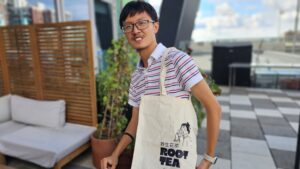
For Jonathan Sun, founder of Root Tea, his objectives are about much more than providing the British public with a comforting hot drink. Jonathan sees a real opportunity to introduce British consumers to higher-quality, distinctive blends while encouraging a deeper appreciation of the craft and provenance behind every cup
Root Tea began its journey in a familiar way for many London food and drink start-ups: by testing products directly with consumers at the capital’s retail markets. Jonathan secured a membership at Duck Pond Market, enabling him to put his teas in front of customers across various markets and gather valuable feedback.
By his own admission, early sales were modest, but selling was only one part of the equation. What those long days at the market really did was provide the validation he needed to convince himself there is a genuine demand for the product.
Root Tea is the classic side hustle, as Jonathan builds it alongside his established role as venture capitalist, fintech investor, and entrepreneurial ecosystem builder. He is best known for backing very early, idea-stage founders using flexible financing structures. It’s no great surprise then that his two worlds collide, as he combines market trading and the development of partnerships with farm shops and organic retailers, with funky corporate events centred around his teas.
At the heart of the Root Tea brand is a commitment to quality and authenticity. Jonathan sources leaves from Fujian Province in south-eastern China and combines them with carefully selected flowers and botanicals to create distinctive blends. The result is a collection of teas designed to be both enjoyable and beneficial to health, offering flavour alongside wellbeing. One of the company’s most popular products, an oolong, rose and ginger blend, delivers what he describes as a sharp, refreshing taste with subtle sweetness, making it suitable for morning energy, digestive support, stress reduction and better blood circulation.
However, building a premium tea brand comes with challenges. Jonathan believes one of the tea industry’s biggest hurdles is consumer education. While coffee has undergone a transformation over the past 15 years, with consumers increasingly willing to pay more for quality and provenance, tea has yet to experience the same shift. Root Tea’s mission is therefore not only to sell tea but also to connect consumers with the value of carefully sourced ingredients, specialist blending and higher production standards.
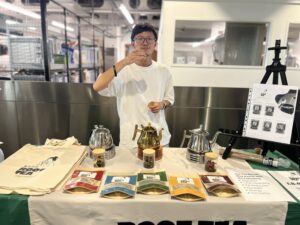
“Everybody who has tried and bought our tea has been very satisfied,” Jonathan says. “The tricky bit for us is that the general consumer is used to buying 80 Twinings tea bags at their local Tesco for £5, or even much cheaper when they are on offer, as they regularly are. I think what the tea industry needs is different makers and different companies to kickstart the transformation that allowed coffee, and especially higher quality coffee companies to start to gain positive notoriety.
“There are currently about 10-15 similar, high-quality tea companies that I know of in the UK. No-one’s making blends exactly the way we’re making them, so I feel pretty safe about our own differentiation in the market,” he says.
“There are quite a few companies that we draw inspiration from though. I hope one day we can in some way follow the steps of what Good & Proper have done, for instance. We love how they’ve gotten into just so many different cafes and farm shops and how they’ve really put that B2B side of their business front and centre. And companies like Brew Tea Company and Nectar & Leaf are great too.”
By studying what others do well, while maintaining his own distinctive approach to blending, Jonathan continues to refine his brand’s offer and positioning. “We routinely buy a lot of our competitors’ teas, just to taste them and compare,” he says. “I’ve also been trying to build relationships with a lot of them just to see how they do things.”
Mission Kitchen has played an important role in Jonathan’s journey to date and helped him to clear some of the traditional start-up hurdles. Although only a handful of tea businesses operate from the community, he says the value of his Mission Kitchen membership extends far beyond sharing a product category. Like many food and drink entrepreneurs, he faces common challenges around supplier relationships, wholesale distribution, retail margins, packaging decisions and investment choices. Being surrounded by founders tackling similar issues creates a valuable environment for learning and collaboration.
Alongside the mentoring network and access to potential customers, the ability to exchange ideas with other producers and learn from their experiences has established itself as a key benefit of being part of the Mission Kitchen community. “The challenges are often the same, regardless of the product,” Jonathan explains. “It’s an ongoing conversation; everyone else here has to answer the same questions at some point in their development,” he adds.
Looking ahead, the ambition is clear. While major retailers such as Whole Foods and Waitrose remain longer-term aspirations, Jonathan’s immediate focus is on continuing to build credibility and traction through his diverse network. It is a measured strategy that prioritises sustainable growth over rapid expansion and for him, success will come not just from selling more tea, but from helping to elevate perceptions of tea itself.
Through thoughtful sourcing, innovative blends and a collaborative approach fostered by Mission Kitchen, Root Tea is quietly contributing to a new chapter in Britain’s tea culture.
Currently, Jonathan sells them online at http://roottea.co, or you can find him on Instagram @drinkroottea