Find us
Follow us


As Mission Kitchen celebrated its fifth birthday in June, its founders reflected on the work that has established it as one of London's most important launchpads for emerging food and drink businesses. Chris Bavin came to meet one of those founders, Charlie Gent, at Mission Kitchen’s fantastic facility within the Food Exchange at New Covent Garden Market, to find out more
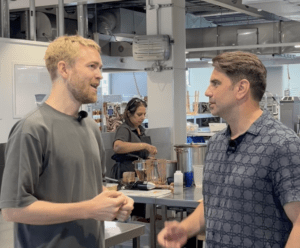
Chris: Firstly, congratulations on your first five years. Let's start with the basics. What exactly is Mission Kitchen and what does it do?
Charlie: Mission Kitchen is an incubator for food and drink start-ups; a platform for food and drink talent to get started, created to support more entrepreneurship and innovation. We try to make it easier, more affordable and more accessible for people from a diverse range of backgrounds to start exciting new food businesses.
Chris: So, if we put it in layman's terms, this is the equivalent of flexible office workspaces where a small business can rent a desk for whatever period of time. It's like that, but for food, isn’t it?
Charlie: Exactly. We've taken the principle of shared workspace and applied it to food. Instead of desks, it's kitchens. Members can book time flexibly and scale up as their business grows. The idea is to keep it affordable and supportive while people get their businesses off the ground.
Chris: Incredible. How has it gone so far?
Charlie: The five years have flown by. We started in 2021 with 32 businesses. Today, more than 100 businesses are based here and, over those five years, we calculated that 404 businesses have been members at one time or another.
We've tracked the wider impact too. We estimate that 346 jobs have been created by businesses based here, while more than half of our businesses are led by female entrepreneurs and more than 50% by global majority founders. Increasing representation and diversity in food and drink is a really important part of what we do.
Our ambition is that people come to us with an idea, spend a year or two here growing, and then outgrow us and move on to bigger things.
Chris: It must be like fostering a child. Is it emotional when a member leaves?
Charlie: It is. I recently had a baby and one of our members joked that I already had hundreds of them! We build strong relationships with founders and become very invested in their journeys. It's bittersweet when they leave, but it's also rewarding because it means the model is working.
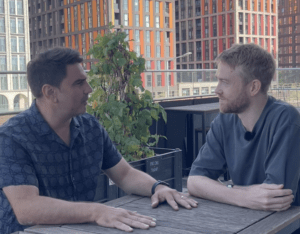
Chris: I love the concept. It's one of those brilliant ideas that, as soon as you've heard it, it makes total sense. Where did the idea come from?
Charlie: Two things. First, my co-founders and I saw that London is full of talented people with great food ideas, but breaking into the industry can be difficult if you lack resources, networks or knowledge.
Second, I wanted to start a food business myself. I assumed there would be a place where I could go and get started, but there wasn't. That sparked the idea of creating one.
Chris: How did you make it happen?
Charlie: We started talking to Covent Garden Market Authority eight or nine years ago. As the Market redevelopment progressed, we could see the opportunity to create a vibrant ecosystem of food businesses in one place.
The Food Exchange was identified as somewhere that could nurture innovation and new business activity. Together, we developed the concept and secured support and funding from the Mayor of London, who recognised the potential for job creation and industry growth.
We were ready to begin construction when Covid struck in March 2020, delaying everything for several months. Eventually we opened in summer 2021, just as the economy was reopening, and we haven't looked back.
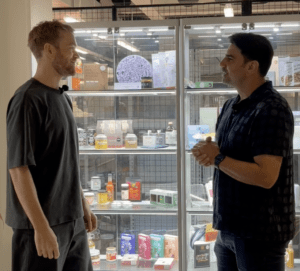
Chris: Give me a few examples of products that have been born in this kitchen?
Charlie: It's a real cross-section of the food and drink industry. We've supported drinks brands, snacks, paneer producers, bakers, ready-meal companies, chilli sauce makers and condiment brands.
We also work with caterers, street-food traders and hospitality businesses using the space for preparation, menu development and concept testing. Alongside them are consultants, photographers and other people working in food who value being part of the community.
Chris: It's about that community, isn’t it? It must be creating a real buzz.
Charlie: It's amazing. We run events, mentoring and learning programmes, but members often get the greatest value simply from being surrounded by more than 100 fellow entrepreneurs.
If someone has a problem to solve, chances are somebody else in the building solved it recently. Whether it's packaging, branding, pricing or operations, there is usually someone who can help.
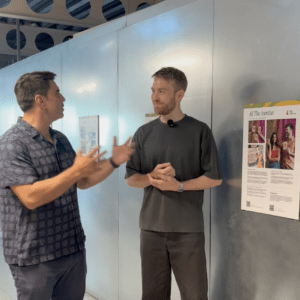
Chris: A difficult one. Can you highlight any standout successes who have made a real go of it?
Charlie: I can't have favourites, but there are a few good examples.
All The Aunties was founded by Riya Patel and Jack Newton. Riya came to us with the idea of creating a modern paneer brand. After developing recipes and the branding here, the business quickly secured listings with Whole Foods and later joined the Tesco Accelerator Programme. Today the products are stocked in Tesco stores across the country.
Another example is Tom Palmer from Yep Kitchen. After spending a decade in China, he returned to the UK determined to produce authentic Sichuan chilli oils and condiments. He began by making products by hand here, secured listings in Whole Foods, Selfridges and independent retailers, and eventually raised investment to build his own specialist chilli-oil factory.
Lune & Wild was another early member. Founders Nadia Simonds and Lara Rodgers created premium organic baby and toddler food. They started small, outgrew Mission Kitchen within a year, moved into their own facility and have since grown into a national business producing more than a million meals a year.
Chris: There must be a real pride to that.
Charlie: Absolutely. Seeing businesses arrive with little more than an idea and later become examples of success is exactly why we created Mission Kitchen. It was fantastic to have those founders back at our fifth birthday celebration.
Chris: In a helicopter?
Charlie: Exactly. The limo pulled up… but seriously, seeing people return five years later having built successful businesses is incredibly rewarding.
Chris: So, tell me, if I'm walking in on day one with an idea for a fantastic product, what's the process?
Charlie: All members get access to three things.
The first is high-quality commercial kitchen space. Rather than taking a lease and investing heavily upfront, members gain affordable access to fully equipped kitchens, storage and operational facilities on a flexible basis.
People can start with just an idea, using evenings and weekends around an existing job. As they grow, they can access more kitchen time, dedicated workspaces and eventually private kitchens where they can install their own equipment and operate independently.
Making food is only one part of building a company though. Founders also need space and support to develop every other part of their business.
That's why the other half of the site operates as a co-working space with desks, offices, meeting rooms and all the facilities people need to run and grow a business.
The third element is our business support programme. We provide expert advice, workshops and training covering everything from marketing and finance to trademarks and legal issues.
We also run meet-the-buyer programmes with retailers and foodservice companies. One of the biggest challenges for emerging brands is getting in front of buyers and decision-makers. We help create those opportunities through relationships with retailers including Whole Foods, Waitrose and, later this year, Ocado.
Chris: I love that. And I suppose it becomes self-perpetuating because the more products developed here that become successful, the more buy-in you have as an untapped source of new food producers.
Charlie: Absolutely. Everyone wants to know what's coming next in food. Buyers are looking for new flavours, products and brands.
Because we're a platform for emerging entrepreneurs, they know they'll discover something original when they visit Mission Kitchen.
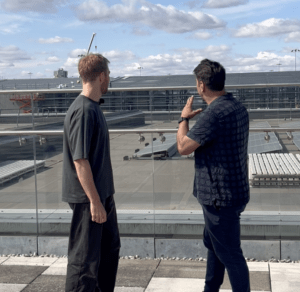
Chris: How beneficial is it for Mission Kitchen to be situated at the heart of New Covent Garden Market with all its history and heritage in fresh produce?
Charlie: It's incredibly exciting. Our members are surrounded by one of the most important food hubs in the country, with access to produce, expertise and industry knowledge.
Most of our members source ingredients from Market traders. We also work closely with the Market community through events, tastings and product development activities, and we regularly introduce members to traders through tours and networking opportunities.
Chris: It sounds like reciprocal inspiration.
Charlie: That's exactly what we're excited about. The Market provides access to fantastic produce and generations of expertise, while our members are creating innovative products and businesses.
As the Market's development continues, there will be even more opportunities to connect producers, entrepreneurs and customers in one place, creating a complete journey from raw ingredients to finished products.
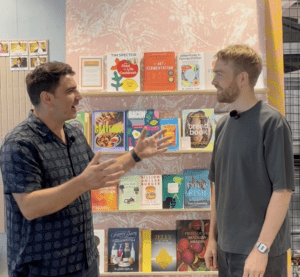
Chris: That feels like a marriage made in heaven. So, what's next for Mission Kitchen?
Charlie: We've built a strong community and support model. The next step is expanding the services and opportunities available to members.
We're also working with larger organisations across food, retail and catering that want closer connections to start-ups and innovation. We'll be hosting more events that bring major industry players together with emerging entrepreneurs.
At the same time, we want to open our doors more widely to the public, giving people opportunities to eat great food, meet founders and celebrate what's being created here.
Chris: I'll hold you to that. But how do people get involved?
Charlie: The easiest way is through our events programme. People can attend panel discussions and networking sessions, meet founders and learn more about the community.
If they're interested in becoming a member, we can arrange a tour, provide information and guide them through a straightforward application process.
Chris: Brilliant. Well, I have got a product. So, I'm going to book a tour in and we'll get that rolling.
Charlie: We look forward to it!